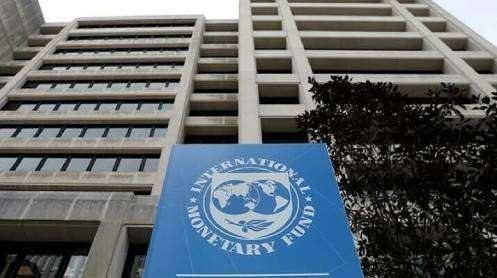
ISLAMABAD: The federal government has informed the International Monetary Fund (IMF) of its plan to recover more than Rs110 billion in provincial power-sector arrears by deducting the amount from provincial shares under the National Finance Commission (NFC) Award, amid concerns from the lender over the fiscal impact of the move.
Thank you for reading this post, don't forget to subscribe!The proposal was discussed during ongoing IMF talks, where the Fund also questioned whether Pakistan would abandon its uniform electricity tariff policy following the privatisation of power distribution companies. According to sources, the government did not provide a clear response.
Under the uniform tariff system, consumers of both efficient and inefficient distribution companies are charged broadly similar electricity rates, with the resulting differences in costs addressed through subsidies and other fiscal mechanisms.
Sources said the IMF received a detailed briefing from the Power Division on the power-sector circular debt, which increased by Rs61 billion during the last fiscal year to Rs1.675 trillion. The Power Division attributed the increase to reduced budgeted subsidies and payment disputes with K-Electric.
The IMF reportedly expressed concern that the rising debt stock was becoming increasingly difficult to justify before its Executive Board, particularly when available fiscal savings could have been used to contain the accumulation.
The government informed the Fund that the Power and Finance divisions had agreed on a mechanism to recover more than Rs110 billion in outstanding provincial electricity dues through adjustments against NFC shares. Of this amount, at least Rs110 billion has reportedly been reconciled, while the government plans to recover around Rs50 billion in the near term.
However, the proposed deductions could face a legal and administrative hurdle if provincial governments do not provide written consent or debit authority to the State Bank of Pakistan. Provincial governments have previously opposed attempts by the federal government to adjust electricity arrears against their NFC allocations.
The Power Division spokesman declined to comment on whether provinces had consented to the proposed deductions, saying the federal adjuster is located in the Finance Division, while the Power Division only issues bills and communicates reconciled amounts. The Finance Division did not respond to requests for comment.
Sources said the Finance Ministry had previously attempted to deduct more than Rs6 billion per month from Khyber-Pakhtunkhwa’s share against a reverse cash grant under the Rs1.036 trillion National Economic Initiative. The deductions could not be made after the provincial government refused to provide debit authority to the central bank.
The IMF has reportedly expressed concern that further deductions could put additional pressure on provincial finances, which are already facing demands to generate Rs1.7 trillion in cash surplus and provide Rs1.036 trillion in cash grants to the federal government.
Provincial governments have already rationalised their development programmes to accommodate these financial requirements. The IMF was also informed that the Power Division is installing smart meters to improve billing accuracy and resolve disputes over electricity consumption and payments by provincial governments.
Uniform Tariff Under Review
The IMF also discussed the government’s plans for privatising power distribution companies and the policies that would apply after privatisation.
According to sources, Pakistani authorities remained reluctant to provide a definitive answer on whether the existing uniform tariff regime would be discontinued after privatisation.
The issue is significant because retaining a uniform tariff can require the government to continue subsidising consumers served by higher-cost distribution companies. The experience of K-Electric has also highlighted the fiscal implications of maintaining such arrangements.
The meeting also reviewed the continuing financial dispute between K-Electric and the federal government, particularly its implications for the power sector’s overall financial viability.
K-Electric has reportedly delayed payments for electricity purchased from the federal system amid disagreements over tariffs and subsidy claims. Sources said the federal government was prepared to clear more than Rs100 billion in claims submitted by K-Electric, subject to resolution of outstanding tariff-related issues.
The National Electric Power Regulatory Authority (NEPRA) and the NEPRA Appellate Tribunal have rejected K-Electric’s request for a Rs40-per-unit tariff and approved a tariff of Rs32.37 per unit. The government expects the company to challenge the decision before the courts.
Industrial Tariff Package
The IMF also sought an update on the delayed review of the industrial incremental support package. Following the Fund’s concerns, a hearing has been scheduled for October 5, with sources indicating that the review could result in an increase in incremental tariff rates.
The package, introduced in December 2025, provides a special tariff of Rs22.96 per unit for eligible industrial consumers and was initially supposed to be reviewed after six months. However, the review has remained pending for nine months.
Meanwhile, industrial electricity costs have increased by around 10% following tariff rebasing, adding to concerns among manufacturers over the competitiveness of domestic production.
Story by Shahbaz Rana